.png)

.png)
How to Measure Affiliate Marketing ROI: The Complete Guide

Most SaaS companies run affiliate programs but can't answer a simple question: "Is this actually working?"
They track clicks. They track signups. But when the CEO asks for ROI, they pull up a spreadsheet and start guessing.
Here's the problem: affiliate marketing drives 16% of all digital commerce orders. Companies with mature affiliate programs report 15-30% of revenue from partner referrals. The average ROI is 12:1, meaning for every $1 spent, companies earn $12 back.
You're leaving that money on the table if you're not measuring properly.
This guide covers the exact formulas, the 8 metrics that actually matter, industry benchmarks, and how to set up tracking that works.
The Affiliate Marketing ROI Formula
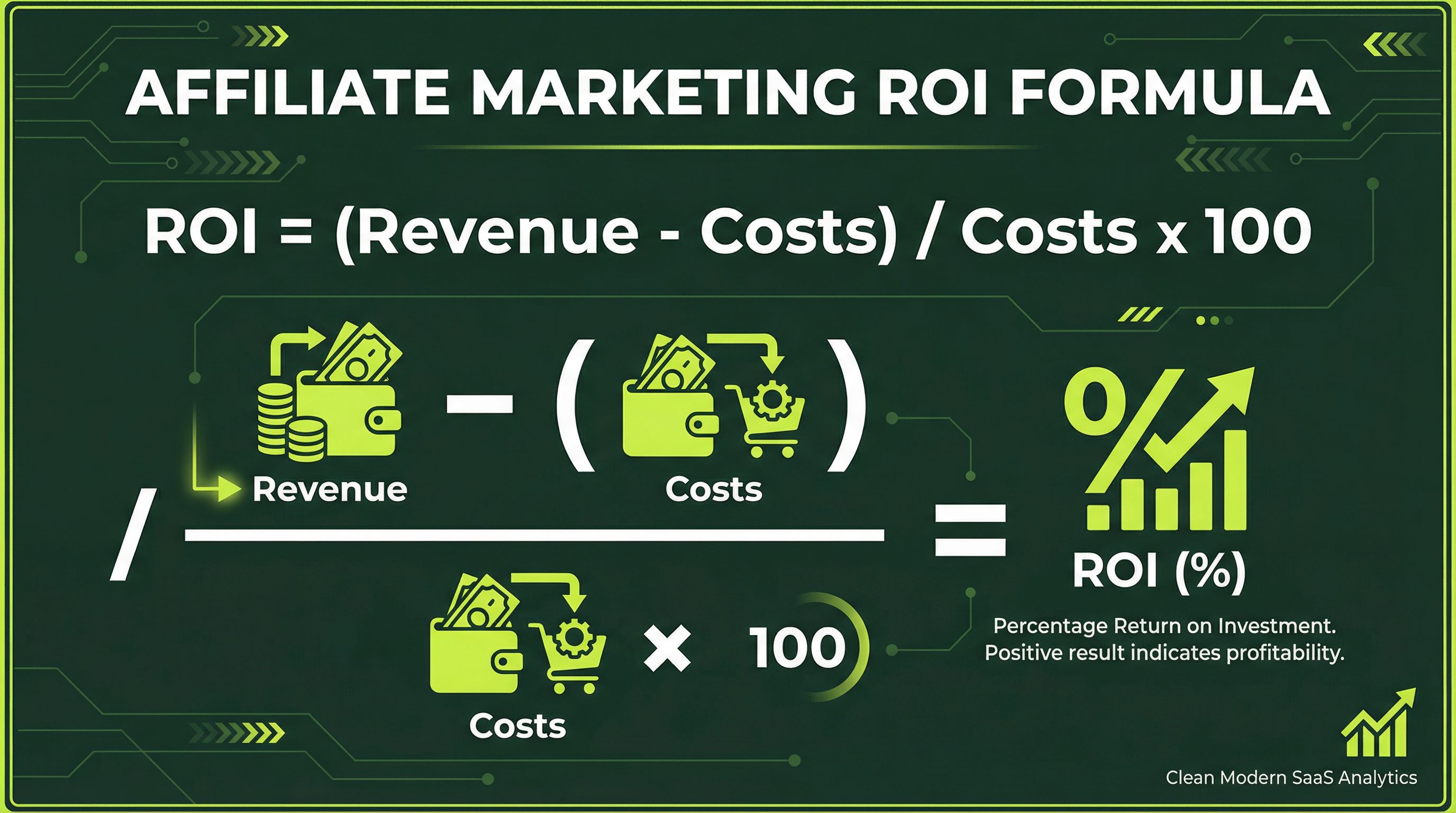
Let's start with the core formula:
ROI = ((Revenue from Affiliates - Cost of Affiliate Program) / Cost of Affiliate Program) × 100
Simple in theory. The challenge is knowing what counts as "revenue" and "cost."
What Counts as Revenue
For SaaS, affiliate revenue isn't just the first payment. You need to track:
- First-month MRR from affiliate-referred customers
- Total MRR over the customer's lifetime (if paying recurring commissions)
- Expansion revenue if affiliate customers upgrade
Example: An affiliate refers a customer who signs up for your $100/month plan. If that customer stays 18 months with no upgrades, affiliate revenue = $1,800.
What Counts as Cost
Most companies only count commissions. That's a mistake. True affiliate program costs include:
💰 Commission Payouts: Recurring or one-time payments to affiliates. Estimate: $5,000/month
🔧 Software Costs: Your affiliate tracking platform. Estimate: $99-500/month
⏱️ Management Time: Answering questions, reviewing applications, optimizing. At 5 hours/week × $50/hour = $1,000/month
🎨 Creative Assets: Graphics, landing pages, promotional materials. Estimate: $200/month
📣 Recruitment Costs: Outreach, onboarding new affiliates. Estimate: $300/month
📊 Total: ~$6,599/month
Pro tip: Tolt charges zero commission on affiliate payouts. Competitors like PartnerStack charge 9%+ on every payout, and that adds up fast.
Worked Example
Let's calculate ROI for a SaaS affiliate program:
Revenue from affiliates (monthly): $50,000
Costs:
- Commissions: $7,500 (15% average)
- Software: $99
- Management: $1,000
- Creative/Recruitment: $400
- Total costs: $8,999
ROI = (($50,000 - $8,999) / $8,999) × 100 = 456%
For every $1 spent on the affiliate program, you're earning $4.56 back. That's solid, but how does it compare?
ROI Benchmarks: What "Good" Looks Like
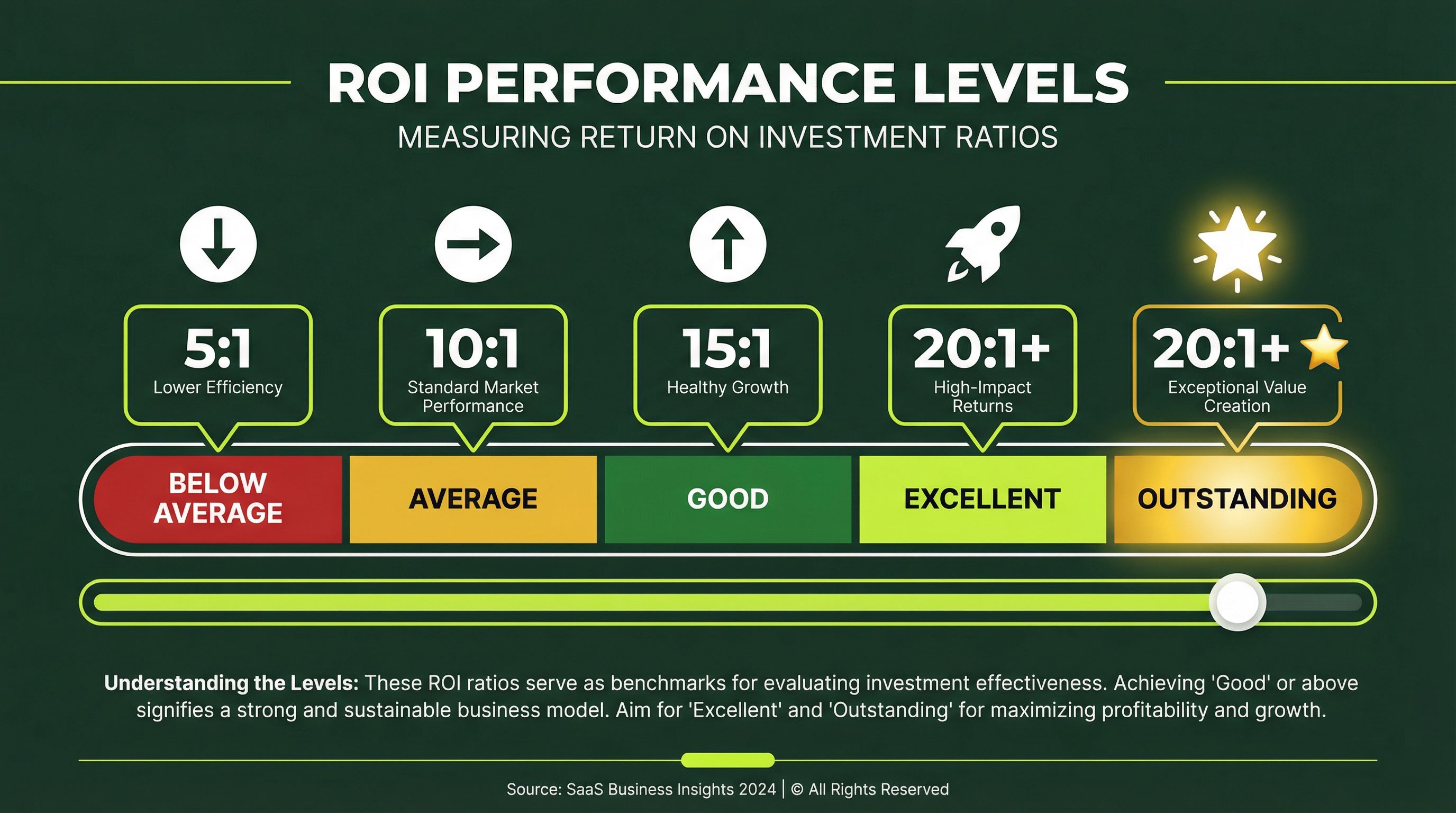
Average affiliate ROI across industries is 12:1. But benchmarks vary significantly:
- 🔴 Below Average (< 5:1): Review your commission structure immediately
- 🟡 Average (5:1 to 10:1): Room for optimization
- 🟢 Good (10:1 to 15:1): Your program is working
- 🚀 Excellent (15:1 to 20:1): Scale it up
- 💎 Outstanding (20:1+): You've found a growth channel
B2B SaaS Benchmarks
SaaS affiliate programs typically see higher ROI than e-commerce because of higher LTV:
- ROI: 10:1 to 20:1
- Commission Rate: 15-30% recurring
- Conversion Rate: 3-7%
- Cookie Duration: 90-180 days
- Active Affiliate Rate: 10-30%
- Affiliate LTV: $500-5,000+
Industry Benchmarks by Vertical
Different industries see different ROI based on their business models:
🖥️ B2B SaaS
- ROI: 10:1 to 20:1
- Commission: 15-30% recurring
- High LTV justifies higher commissions
🛒 E-commerce
- ROI: 8:1 to 12:1
- Commission: 5-15% one-time
- Lower margins, higher volume
💳 Finance/Fintech
- ROI: 15:1 to 25:1
- Commission: $50-500 bounty
- High customer value, strict compliance
📚 Online Education
- ROI: 10:1 to 15:1
- Commission: 20-40%
- Great for influencer partnerships
🏢 Agency Services
- ROI: 12:1 to 18:1
- Commission: 10-20% of first project
- Relationship-based referrals
When ROI Is "Bad" (And What to Do)
If your affiliate ROI is below 5:1, something's broken. Here's how to diagnose:
ROI below 3:1 = Program needs major fixing or shutdown
- Check: Are commissions too high relative to LTV?
- Check: Are affiliates sending low-quality traffic?
- Check: Is your tracking capturing all costs?
ROI between 3:1 and 5:1 = Room for optimization
- Review: Commission structure may need adjustment
- Review: Affiliate mix may favor quantity over quality
- Review: Conversion funnel may have leaks
ROI above 10:1 = Scale the program
- Double down on top-performing affiliates
- Increase recruitment in high-performing channels
- Consider raising commissions to attract more quality affiliates
8 Essential Affiliate Marketing Metrics
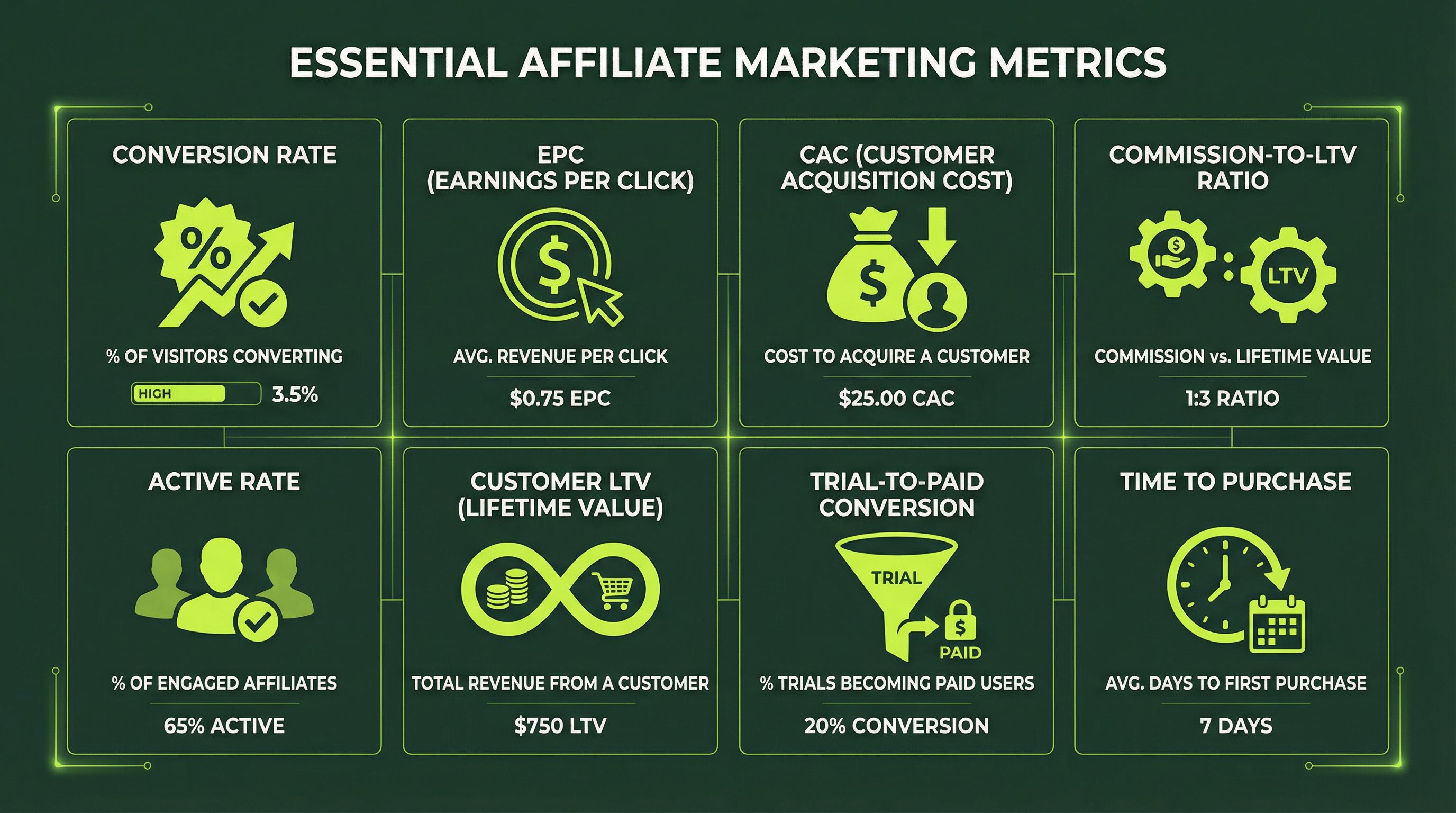
ROI is the north star metric, but you need supporting metrics to diagnose problems and find opportunities.
1. Conversion Rate
Conversion Rate = (Conversions / Clicks) × 100
What it tells you: The percentage of affiliate traffic that becomes customers.
Benchmarks:
- E-commerce: 1-3%
- B2B SaaS: 3-7%
- High-ticket services: 5-10%
Action: If conversion rate is low, either affiliate traffic quality is poor OR your landing pages aren't converting. A/B test landing pages before blaming affiliates.
2. Earnings Per Click (EPC)
EPC = Total Affiliate Revenue / Total Clicks
What it tells you: How much revenue each affiliate click generates on average.
Benchmarks:
- E-commerce: $0.50-3.50
- SaaS: $1.00-5.00
- High-ticket B2B: $5.00-50.00+
Action: Share EPC with affiliates. High EPC motivates promotion. Low EPC means you need to improve offers or conversion.
3. Customer Acquisition Cost (Affiliate CAC)
Affiliate CAC = Total Affiliate Costs / Number of New Customers
What it tells you: What you pay to acquire each customer through affiliates.
Why it matters: Compare to your paid ads CAC. Affiliate CAC should be lower. If it's not, something's wrong.
Example:
- Affiliate costs: $8,999/month
- New customers from affiliates: 50
- Affiliate CAC = $179.98
Compare that to Google Ads CAC of $300+ and you see why affiliate programs win.
4. Commission-to-LTV Ratio
Commission-to-LTV Ratio = (Total Commission / Customer LTV) × 100
What it tells you: What percentage of customer lifetime value goes to affiliate commissions.
Healthy range: 10-25% of first-year LTV
Example:
- Customer LTV: $2,400 (24 months × $100/month)
- Commission paid: $360 (30% of first 3 months)
- Ratio: 15% ✓
If this ratio exceeds 30%, your commission structure is too generous for your unit economics.
5. Active Affiliate Rate
Active Affiliate Rate = (Active Affiliates / Total Affiliates) × 100
What it tells you: What percentage of your affiliates are actually promoting you.
Benchmark: 5-15% is typical (Pareto principle applies)
Reality check: Most affiliate programs have 100+ signups but only 10-20 active promoters. Focus your energy on the active ones. They're your 20% driving 80% of results.
6. Affiliate Customer LTV
What it tells you: Whether affiliate-referred customers stick around as long as other customers.
Compare: Affiliate LTV vs. Non-affiliate LTV
Red flag: If affiliate customers have significantly lower LTV, you have a quality problem. Affiliates might be over-promising or targeting the wrong audience.
Green flag: If affiliate LTV is equal or higher, your affiliates understand your product and attract the right customers.
7. Trial-to-Paid Rate (SaaS-specific)
Trial-to-Paid Rate = (Paid Conversions / Trial Signups) × 100
What it tells you: How well affiliate-referred trials convert to paying customers.
Benchmark: 10-25% for B2B SaaS
Why it matters: Some affiliates drive lots of trials but few conversions. That inflates your "conversion" numbers but kills ROI. Track trial-to-paid to identify affiliates who send tire-kickers vs. qualified buyers.
Tolt tracks trial-to-paid automatically through Stripe, Paddle, and Chargebee integrations.
8. Time to First Purchase
Time to First Purchase = Purchase Date - First Affiliate Click Date
What it tells you: How long the sales cycle is for affiliate-referred customers.
Benchmarks:
- E-commerce: 1-7 days
- B2B SaaS: 14-90 days
- Enterprise: 90-180 days
Why it matters: This determines your cookie duration. If your average time to purchase is 45 days but your cookie expires at 30 days, you're losing attribution and demotivating affiliates.
Action: Set cookie duration to at least 1.5x your average time to purchase. For B2B SaaS, that means 90-180 days.
Setting Up Proper Tracking
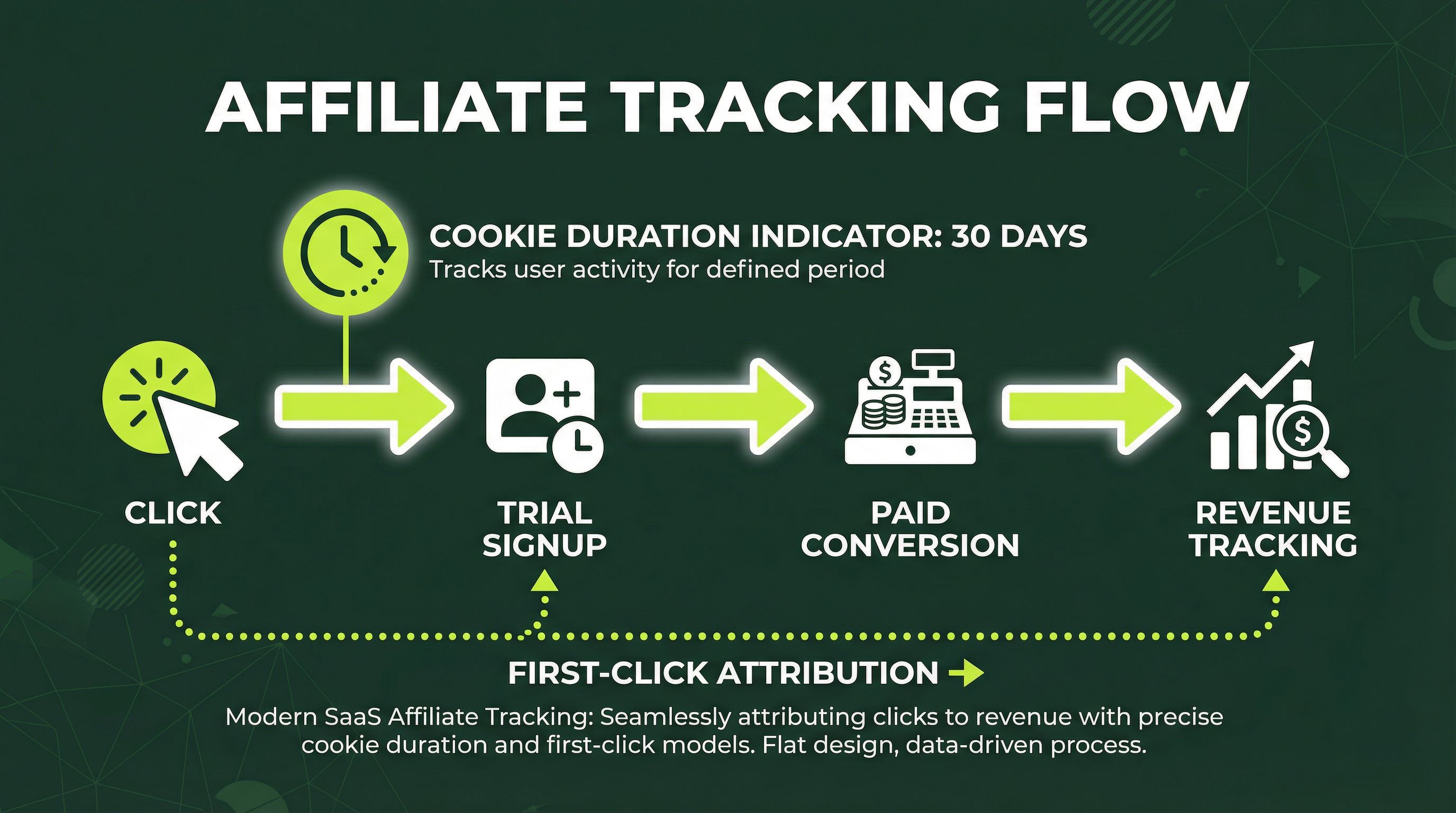
Metrics are useless if your tracking is broken. Here's what you need:
The Attribution Problem
B2B purchases involve multiple touchpoints:
- Affiliate blog post introduces your product
- Prospect visits your site, leaves
- Returns via Google search 3 weeks later
- Signs up for trial
- Converts to paid 14 days later
Without proper tracking, you'd attribute that sale to Google, not the affiliate who actually introduced the customer.
This is the attribution problem, and it's why most affiliate programs undercount their actual performance. The affiliate who wrote the blog post that introduced your product deserves credit, even if the final conversion came through a different channel.
First-Click vs. Last-Click Attribution
There are two main attribution models:
First-click attribution: Credit goes to the first touchpoint (usually the affiliate). This is standard for affiliate programs and rewards discovery.
Last-click attribution: Credit goes to the final touchpoint before conversion. This often credits branded searches or direct visits instead of affiliates.
For B2B SaaS, first-click attribution makes more sense. The affiliate's blog post, video, or recommendation introduced the customer. That introduction has value even if the customer took 45 days to convert through a different channel.
Most affiliate tracking software (including Tolt) uses first-click attribution with configurable cookie windows.
What Your Tracking Must Handle
- Long cookie durations (90-180 days for B2B)
- Cross-device tracking (prospect researches on mobile, converts on desktop)
- Cross-subdomain tracking (marketing site → app.yoursite.com → checkout)
- Trial-to-paid attribution (not just signup attribution)
- Revenue tracking (actual payments, not just conversions)
The Manual Tracking Problem
Spreadsheets don't scale. If you're manually tracking:
- Affiliate links
- Referral codes
- Conversion timestamps
- Commission calculations
- Payout schedules
You're wasting hours and making errors. One attribution mistake can cost you an affiliate relationship.
What Tolt Tracks Automatically
Tolt integrates directly with your payment processor to track:
- Click → Trial → Paid conversion path
- Revenue per affiliate (actual Stripe/Paddle/Chargebee data)
- Recurring commissions over customer lifetime
- Automatic payout calculations
- Cross-subdomain tracking for SaaS apps
Setup takes 15 minutes. Connect Stripe, set commission rates, launch.
5 Mistakes That Kill Your ROI Tracking
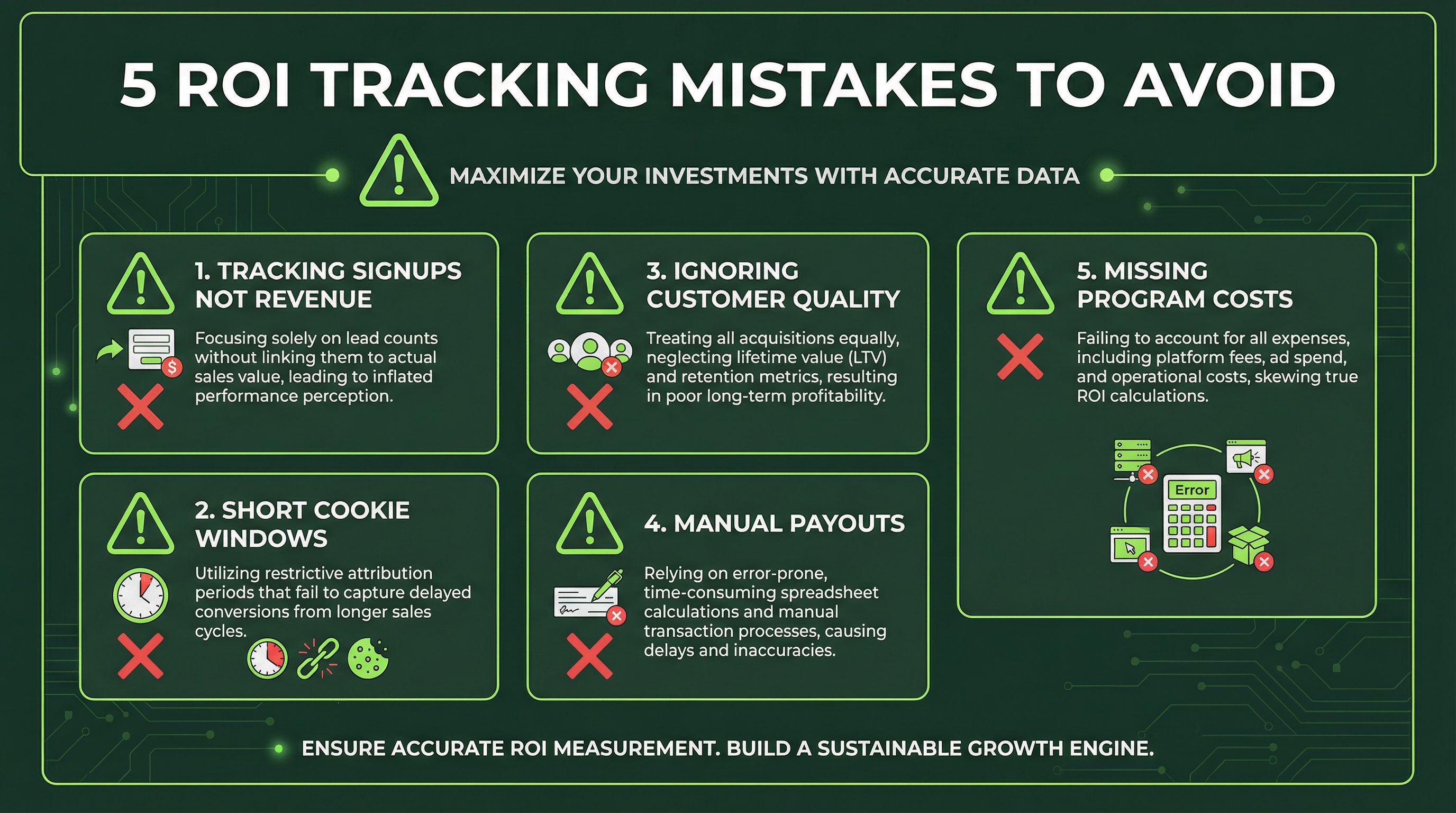
1. Tracking Signups Instead of Revenue
The mistake: Celebrating "100 affiliate signups this month!"
The problem: Signups don't pay bills. If 90 of those signups churn in month one, your "successful" affiliate program is burning money.
The fix: Track revenue, not vanity metrics. Measure MRR from affiliate customers, not signup counts.
2. Short Cookie Windows
The mistake: Using 7-30 day cookies for B2B products.
The problem: B2B sales cycles run 30-90+ days. Short cookies mean losing attribution and frustrating affiliates who did the work but don't get credit.
The fix: Use 90-180 day cookies. Tolt lets you configure cookie duration per program.
3. Ignoring Customer Quality
The mistake: Paying commission on any signup, regardless of customer quality.
The problem: Some affiliates drive volume at the expense of quality. You pay commissions on customers who churn in 30 days.
The fix: Track affiliate customer LTV. Consider longer payout schedules (pay after 30-60 days) to ensure customer sticks.
4. Manual Payout Processes
The mistake: Calculating commissions in spreadsheets and sending PayPal payments manually.
The problem: Errors, delays, and frustrated affiliates. Late payments kill affiliate motivation faster than low commissions.
The fix: Automate payouts. Tolt integrates with PayPal, Wise, and Payoneer for automatic affiliate payments.
5. Not Tracking Program Costs
The mistake: Only counting commissions as "cost."
The problem: You're understating true costs by 20-50%. Your ROI calculation is wrong.
The fix: Track all costs: software, management time, creative assets, recruitment. Then calculate true ROI.
How to Improve Your Affiliate ROI
Your ROI is calculated. Your metrics are tracked. Now what?
1. Focus on Top Performers
The 80/20 rule applies: 20% of affiliates drive 80% of results.
Action: Identify your top 10 affiliates by revenue. Offer them:
- Higher commission tiers
- Exclusive deals for their audience
- Early access to features
- Co-marketing opportunities
Don't spread resources thin across 100 inactive affiliates.
2. Optimize Commission Structure
If ROI is too low: Your commissions might be too high. Test reducing rates for low-value affiliates.
If affiliate recruitment is struggling: Your commissions might be too low. Test increasing rates or adding bonuses for top performers.
For SaaS: Recurring commissions align incentives. Affiliates earn more when customers stick around, so they refer better-fit customers.
3. Improve Conversion Rate
Every 1% improvement in conversion rate flows directly to ROI.
Test:
- Dedicated landing pages for affiliate traffic
- Affiliate-specific offers or discounts
- Faster signup flows
- Clearer value propositions
4. Extend Cookie Duration
If your average time to purchase is 30 days but your cookie expires at 14, you're losing attribution.
Action: Extend cookies to 90+ days. Affiliates will be more motivated knowing they'll get credit for longer sales cycles.
5. Recruit Better Affiliates
Quality over quantity.
Best B2B affiliates:
- Industry consultants with your target audience
- Complementary tool companies
- Content creators in your niche
- Your existing customers
Worst affiliates:
- Coupon sites (attract bargain hunters)
- Random bloggers with no audience fit
- Anyone who promotes everything
6. Provide Better Affiliate Resources
Affiliates convert better when you make their job easier.
Essential resources to provide:
- Branded affiliate portal with performance tracking
- Marketing assets (banners, screenshots, logos)
- Email templates for outreach
- Case studies they can share
- Product demos or walkthrough videos
- Comparison pages vs. competitors
The more ammunition you give affiliates, the more effectively they can promote. Don't make them create everything from scratch.
7. Create a Tiered Commission Structure
Flat commission rates don't incentivize growth. Tiered structures do.
Example tiered structure:
- 0-5 customers/month: 20% commission
- 6-15 customers/month: 25% commission
- 16+ customers/month: 30% commission
This motivates affiliates to promote more actively. Top performers feel rewarded. And your highest-value affiliates have a reason to stay.
Start Measuring Your Affiliate ROI Today
You can't improve what you don't measure.
Key takeaways:
- ROI formula: (Revenue - Costs) / Costs × 100
- Benchmark: 10:1+ ROI is good for B2B SaaS
- Track 8 metrics: Conversion rate, EPC, CAC, Commission-to-LTV, Active rate, Affiliate LTV, Trial-to-paid, Time to purchase
- Use 90+ day cookies for B2B sales cycles
- Automate tracking to eliminate errors and save time
Stop guessing. Start measuring.
Tolt makes affiliate tracking automatic. Integrate with Stripe, Paddle, or Chargebee in 15 minutes. Automatic revenue tracking, commission calculations, and payouts with zero commission fees.
Start your 14-day free trial →
Your competitors are measuring. You should too.





Grow on autopilot with an Affiliate Program!


